

AI Isn't Replacing Great Designers. It's Exposing Average Ones.

AI Isn't Replacing Great Designers. It's Exposing Average Ones.
"Will AI replace designers?"
It's one of the biggest conversations happening across the creative industry right now.
My answer?
No.
But I do believe it's changing what it means to be a great designer.
AI is one of the greatest tools we've ever been given.
I use AI almost every day.
Not to replace my thinking, but to strengthen it.
It helps me research faster, explore different perspectives, organise ideas, refine copy and overcome creative blocks. It allows me to spend less time on repetitive tasks and more time doing the work that actually creates value for my clients.
The best results don't come from simply asking AI to do the work.
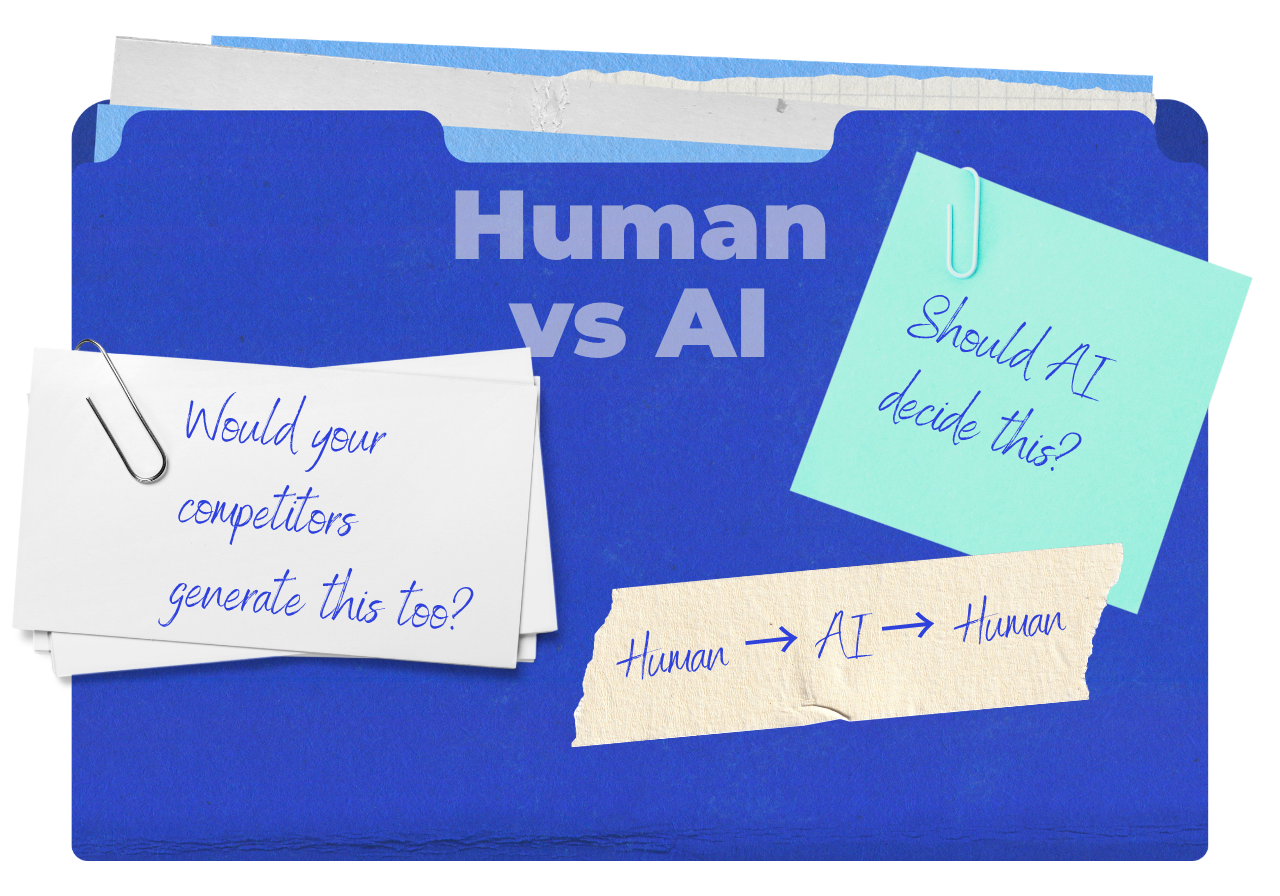
They come from what I call the Human → AI → Human approach.
Every great project starts with human thinking. AI then becomes a tool to explore ideas, challenge perspectives and improve efficiency. Finally, it comes back to human judgement, where experience, creativity and critical thinking refine the work into something meaningful.
AI should enhance our thinking, not replace it.
Design was never just about making things look good.
If your job is simply changing fonts, arranging layouts or recreating what's already been done, AI is becoming very good at that.
But that's only one small part of design.
The real work happens long before a single visual is created.
It starts with understanding the business.
Understanding the customer.
Understanding the problem.
Then asking the right questions before offering a solution.
AI can't sit across the table from a founder and recognise what they're not saying.
It can't read the room.
It can't challenge assumptions.
It can't connect years of commercial experience with human intuition.
That's where people still matter.
AI can generate logos. Designers create brands.
AI has become remarkably good at generating logos.
The problem is that it learns from what's already out there.
Ask AI to generate a logo for a coffee shop, law firm or construction company, then search businesses in that industry. You'll quickly notice something interesting. The designs often feel familiar because they're built on existing visual patterns and trends.
Most AI-generated logos are highly literal. They solve the obvious problem.
Great designers look beyond the obvious.
A strong brand identity isn't just about creating an attractive icon. Every element is considered. The symbolism within the icon, the proportions, the typography, the spacing, the curves, the visual hierarchy and the smallest details all work together to communicate something bigger than the logo itself.
Those decisions aren't random.
They're intentional.
They're informed by strategy, positioning and a clear understanding of the business.
That's where thoughtful design becomes difficult to replicate.
AI learns from AI.
Here's something else worth thinking about.
As more businesses rely on AI-generated creative, AI will increasingly learn from work that was generated by AI in the first place.
Over time, brands begin to resemble one another.
The same layouts.
The same illustrations.
The same visual language.
We're already starting to see it.
People can often recognise an AI-generated flyer, social post or presentation before they're told it was created with AI.
When everything starts looking the same, originality becomes far more valuable.
Human creativity is becoming a competitive advantage.
Ironically, I don't think AI is making human designers less valuable.
I think it's making the best ones even more valuable.
Businesses don't just want something that looks professional. They want something that reflects who they are and creates a genuine connection with the people they're trying to reach.
If a business relies entirely on AI for its branding and creative work, people naturally start asking questions.
If they're willing to cut corners on the way they present themselves, where else are they cutting corners?
That may not always be a fair assumption.
But perception has always been one of the most powerful forces in branding.
And perception influences trust.
The businesses that will stand out over the next decade won't be the ones using the most AI.
They'll be the ones using it most thoughtfully.
AI doesn't understand context.
One of the biggest lessons I've learnt is that context changes everything.
Two businesses can ask for exactly the same thing.
The right solution may be completely different.
That's because every business has different goals, customers, competitors and challenges.
AI can generate answers.
Experience determines whether those answers are actually right.
The future belongs to people who think well.
I don't believe AI is replacing great designers.
I believe it's exposing the difference between those who simply execute and those who think.
The designers who rely on templates and trends will find it harder to stand out.
The designers who understand business, strategy, psychology and communication will become even more valuable.
Because clients aren't really paying for software.
They're paying for clarity.
For judgement.
For ideas.
For someone who can see the bigger picture.
AI has simply changed how those ideas come to life.
And honestly?
I think that's a good thing.